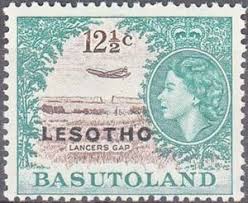
The Enclave Kingdom is enchanting in many ways, and despite being hindered by increasing Poverty, Unemployment, a never ending Brain Drain, Poor Governance as well as a huge deficit in the functioning and independence of organs of state, it’s mysterious culture, history, aesthetic beauty and resilient peoples seem to transcend its Socio-Economic woes.
It has enjoyed the benefits of being completely surrounded by Africa’s traditionally powerhouse economy, South Africa, however South Africa’s gradual decline in Human Development, Economic Growth, Good Governance and Corrupt State Capitalism has had dire consequences for the Enclave Kingdom as well.
The Covid 19 Global pandemic has only further put the spotlight on Lesotho’s geo-political vulnerabilities, and in many ways paints a picture of a nation, whose problems have been compounded by a far superior neighbor which is dealing with its own internal crisis’, but on a magnified scale.
It may be fair to say that South Africa has also been somewhat ambiguous in its dealings with its neighbors in general. Botswana is the only one of its SADC neighbors which seems to be heading in a more desirable trajectory, in terms of its Human Development Index, particularly in the domain of its robust Governance efforts as well as its flourishing Economy. As for the rest of South Africa’s neighbors, there is very little to write home about.
Swaziland, Angola, Zimbabwe, Mozambique as well as Namibia all seem to be caught in either a Resource Trap, or a Non-Development Trap, further exacerbated by a weakening Rand and stagnant Economy, therefore suppressing regional revenue which can be generated for the Southern African Customs Union. If Botswana is the SADC model for rapid prosperity and functionality, then Zimbabwe could be said to be the SADC model for catastrophic failure.
South Africa’s downward spiral seems to only be compounding the issues of regional development, and in Lesotho’s case, there seems to be very little escape aside from incorporation into its troubled neighbor, or a complete revamping of its political system, along with its Constitution. Both scenarios seem very illusive, and incorporation in South Africa might not be as econmically advantageous as it might have been a decade or two ago.
There however may be a third way, to use the language of non-alignment, which would manifest itself as a cultural revolution of civic self-reliance, an internalization of the best aspects of Basotho History which would form the fertile ground needed for psychological detachment from the clutches of Politicized State power, lawlessness and patronage.
There is very little prospect of the Political system self-correcting by itself, unless South Africa experiences some rapid reforms of its architecture of State Capitalism. The ruling elite in general may no longer have a coherent vision for its own peoples, or the ability to enforce a united vision due to the constraints of the nations real politik.
A civic-induced cultural revolution might then be the most realistic and viable avenue for bringing about socio-economic freedom for the inhabitants of the Enclave Kingdom, especially for its economic migrant population, its youth, orphans, and the destitute trapped in cyclical poverty and precarity.
The fact that Sesotho language and culture continues to play a very influential role in the ethnic tapestry of South Africa means that there are also possibilities to bridge the legacy of the colonial divide-and-rule system, and the artificial divisions it has created between the African inhabitants of Southern Africa at large.
There are only three existing enclave territories in the world, that are entirely surrounded by another country, that being San Marino, the Vaitican City and Lesotho, making it geographically speaking, extremely unique.
On 12 March 1868, acting in the face of continued Voortrekker aggression, Wodehouse issued a proclamation declaring Basutoland a British Protectorate. This was formalized by the Basotho on 15 April 1868. In 1871 Basutoland was annexed into the Cape Colony.
Boundary negotiations with the Voortrekkers were concluded in February 1869, during which large tracts of land in the Ficksburg, Fouriesburg, Ladybrand, Thaba ‘Nchu, Wepener and Zastron districts were ceded to the Orange Free State. A series of inconclusive territorial wars between the Basotho and Dutch slowly eroded Basotho land holdings in what was to become the Orange Free State despite the intervention of the British at the Cape.
Despite having managed to retain his independence against the Voortrekkers, Moshoeshoe realized that the future of the sovereignty of his peoples lay in a close association with the British. As a result, in 1862, he wrote to the newly-appointed Governor of the Cape Colony, Sir Philip Wodehouse, suggesting that an alliance be formed between the two territories.
 The Contrarian Aquarian Platform